
 English
 Español
 Português
The Underground Cities of Cappadocia

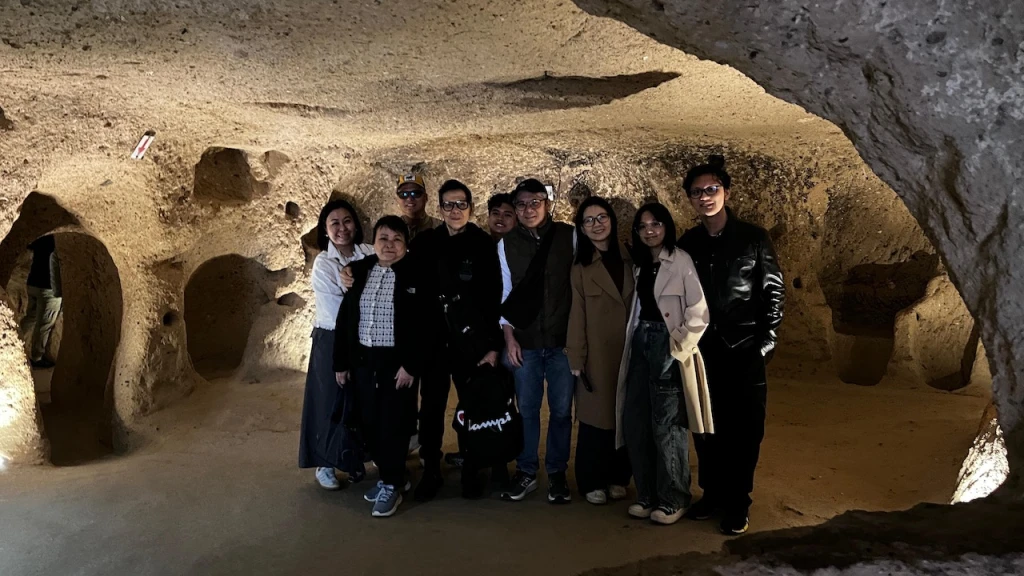
The underground cities of Cappadocia are among the world's most extraordinary archaeological wonders. Carved deep into the volcanic rock of Central Anatolia, these remarkable subterranean complexes allowed thousands of people to live safely underground during periods of invasion, war, and religious persecution.
Although their exact date of construction remains unknown, historical sources confirm that they were already in use by the 5th century BC. The Greek historian Xenophon (430–355 BC) described underground villages in his work Anabasis, mentioning hidden entrances, rock-cut chambers, and areas designed for storing livestock and food.
Life Underground
The underground cities were designed to accommodate entire communities for extended periods.
Inside these remarkable settlements were:
- Family living quarters
- Animal stables
- Kitchens and dining areas
- Wine cellars and storage rooms
- Churches and chapels
- Religious schools
- Water wells
- Sophisticated ventilation systems
- Temporary burial chambers
The various sections were connected by narrow tunnels and corridors that could be sealed with enormous circular stone doors to prevent enemy access.
Ingenious ventilation shafts supplied fresh air even to the deepest levels, while hidden wells ensured a reliable water supply during long sieges.
To date, archaeologists have discovered more than 36 underground cities throughout Cappadocia, although many more are believed to remain unexplored.
Kaymaklı Underground City
Kaymaklı Underground City is one of the largest and most visited underground cities in Cappadocia.
Located on the road between Nevşehir and Niğde, it extends approximately 15–25 meters (50–82 feet) below ground and consists of several interconnected levels linked by narrow passageways.
Among its most important sections are:
- Stables
- Residential rooms
- Churches
- Kitchens
- Wine cellars
- Large food storage facilities
The abundance of storage areas suggests that a substantial population lived here for extended periods.
Unlike some other underground cities, Kaymaklı is characterized by its narrow corridors and low ceilings, which were designed to make defense easier during attacks.
Derinkuyu Underground City
Derinkuyu Underground City is the deepest and most famous underground city in Cappadocia.
Located approximately 25 kilometers (16 miles) from Nevşehir, it reaches a depth of about 85 meters (279 feet) and consists of eleven underground levels.
Archaeologists have identified more than 50 ventilation shafts and estimate that the city could have sheltered up to 10,000 people.
Its remarkable facilities include:
- Churches
- Religious schools
- Kitchens
- Wine cellars
- Storage rooms
- Residential quarters
- Assembly halls
Many historians believe that Derinkuyu may once have been connected to Kaymaklı through an extensive underground tunnel network.
Özkonak Underground City
Located approximately 14 kilometers (9 miles) from Avanos, Özkonak Underground City features several unique defensive innovations.
Its tunnels are narrower than those found in many other underground cities, and small communication shafts connect different levels of the complex.
One of its most remarkable defensive features is a series of vertical holes carved above passageways, which were reportedly used to pour hot oil onto invading enemies.
Saratlı Underground City
Located near Aksaray, Saratlı Underground City may have been inhabited even before Christianity spread throughout Cappadocia.
Although archaeologists believe the city originally had seven levels, only three have been excavated so far.
Visitors can explore:
- Stables
- Kitchens
- Wine cellars
- Bathing areas
- Storage rooms
- Ventilation systems
Acıgöl Underground City
The Acıgöl Underground City is located in the center of the district of the same name.
Only part of the complex is currently open to visitors. The city has three separate entrances and contains numerous chambers connected by narrow rock-cut corridors.
The Topada Hittite Monument
Near the town of Acıgöl stands one of the most important monuments of the Neo-Hittite Period.
The Topada Inscription, carved into a large rock face, contains eight lines of Hittite hieroglyphic writing describing military campaigns carried out during the reign of Wasusarma, King of Tabal, in the 8th century BC.
Today, this inscription remains an invaluable source for understanding the ancient history of Anatolia.
Tatlarin Underground City
Located about 10 kilometers (6 miles) from Acıgöl, Tatlarin Underground City is one of Cappadocia's most fascinating underground settlements.
Although only a small portion is open to the public, its spacious kitchens, storage rooms, and food preservation areas indicate that it once supported a large population.
One of Tatlarin's most distinctive features is the presence of bathing facilities, which are rarely found in other underground cities throughout Cappadocia.
Tatlarin Church
Near the underground city stands Tatlarin Church, renowned for its exceptionally well-preserved Byzantine frescoes.
Its paintings depict numerous biblical scenes, including:
- Jesus Christ
- The Virgin Mary and Child
- The Crucifixion
- The Transfiguration
- Emperor Constantine and Saint Helena
- Various Christian saints
Mazı Underground City
Located south of Ürgüp, Mazı Underground City, formerly known as Mazata, features four separate entrances and a sophisticated defensive system protected by enormous circular stone doors.
Like the other underground cities of Cappadocia, it was designed to provide a safe refuge for local communities during times of conflict and invasion.
A Unique Heritage of Humanity
The underground cities of Cappadocia are extraordinary examples of ancient engineering, human adaptation, and survival.
Their sophisticated ventilation systems, ingenious security features, and well-organized layouts demonstrate the remarkable ingenuity of the civilizations that inhabited this region for thousands of years.
Today, these underground cities are among Turkey's most popular tourist attractions, offering visitors an unforgettable journey beneath the surface of Cappadocia to explore one of the world's most remarkable archaeological and historical treasures.
Our partners