
 English
 Español
 Português
The Rock-Cut Churches of Cappadocia

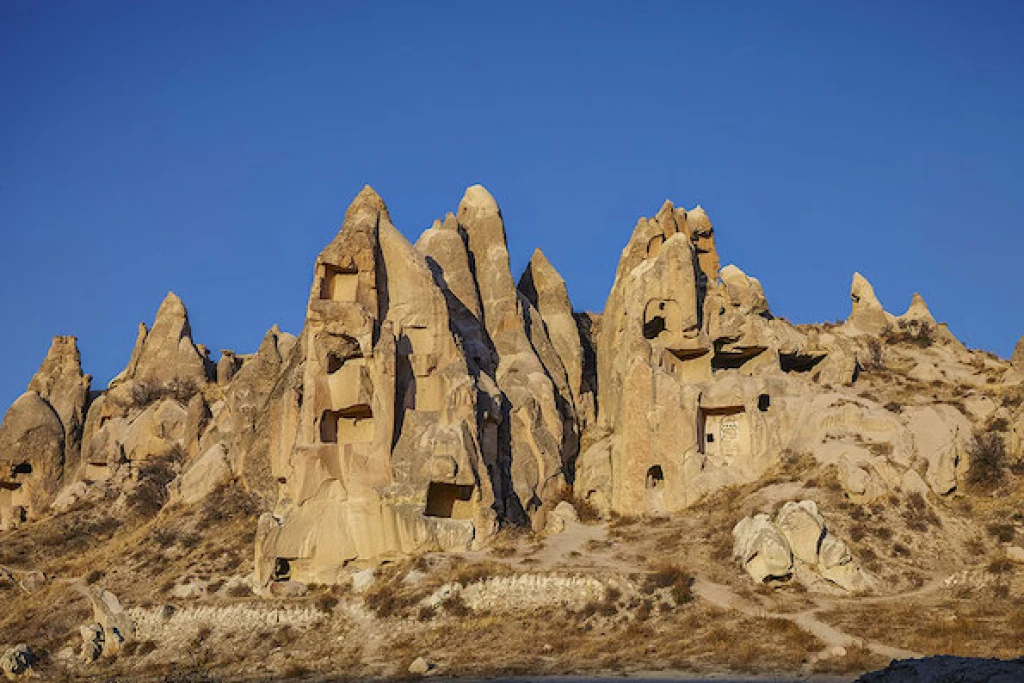
The rock-cut churches of Cappadocia are among the region's most remarkable historical and cultural treasures. For centuries, these extraordinary cave churches served as places of worship, monastic communities, and safe refuges for the Christian populations who lived throughout Cappadocia.
In the early 18th century, the French explorer Paul Lucas was sent to the Middle East by King Louis XIV of France. While traveling toward Kayseri, he was astonished to discover the volcanic valley of Korama (modern-day Göreme), where he found cone-shaped rock formations containing homes carved directly into the cliffs.
At first, he believed he had discovered the ruins of a lost civilization. Later, he realized these remarkable structures had been homes, monasteries, and churches used by Christian communities for centuries. His writings inspired many European archaeologists, historians, and explorers to visit Cappadocia.
Among their greatest discoveries were beautifully decorated cave churches adorned with magnificent Byzantine frescoes. Today, many of these monuments are preserved within the Göreme Open-Air Museum, a UNESCO World Heritage Site.
The Dark Church (Karanlık Kilise)
The Dark Church takes its name from the limited amount of natural light entering the building. Because very little sunlight reaches the interior, its frescoes have remained exceptionally well preserved.
Originally designed as a two-story monastery, the upper level housed the monks' living quarters, while the lower level served as the church.
Its extraordinary frescoes illustrate major events from the life of Jesus Christ, including:
- The Ascension
- The Crucifixion
- The Resurrection
- The Last Supper
- The Betrayal of Judas
- Jesus Before Pontius Pilate
Tokalı Church (The Buckle Church)
Tokalı Church is the largest and one of the best-preserved churches in Cappadocia. It consists of two churches built during different historical periods.
Its magnificent frescoes depict important scenes from the life of Jesus Christ, including:
- The Annunciation
- The Baptism of Christ
- The Entry into Jerusalem
- The Wedding at Cana
- The Raising of Lazarus
The dominant colors—deep blue, green, red, and brown—remain remarkably vibrant after nearly a thousand years.
Çarıklı Church (The Sandal Church)
Built during the 11th century, Çarıklı Church is named after footprints resembling sandal prints found near its entrance.
The church features a cross-vaulted structure crowned by a central dome. Its frescoes portray Christ Enthroned alongside the Virgin Mary and Saint John, as well as scenes depicting the Raising of Lazarus and angels gathered at Christ's tomb.
Elmalı Church (The Apple Church)
Known as the Apple Church, Elmalı Church takes its name from the apple trees that once grew nearby.
A large window fills the interior with natural light, beautifully illuminating frescoes that depict:
- The Baptism of Jesus
- The Crucifixion
- The Resurrection
- The Four Evangelists
- Christ Enthroned
- The Virgin Mary
- Saint John the Baptist
Yılanlı Church (The Snake Church)
Dating from the 11th century, Yılanlı Church features a rectangular floor plan with a barrel-vaulted ceiling.
Its wall paintings portray several important figures of Eastern Christianity, including:
- Saint Basil
- Saint Theodora
- Saint George
- Saint Thomas
- Saint Onuphrius
Saint Catherine's Chapel
Located between the Dark Church and Çarıklı Church, this small chapel was commissioned by a woman named Anna.
It features a central dome and several burial chambers located in the narthex and side niches.
Its frescoes depict:
- Saint Catherine
- Saint George on horseback
- Saint Basil
- Saint Gregory
- Saint John the Baptist
- Saint Theodora
Saint Barbara Church
Dating from the 11th century, Saint Barbara Church is famous for its wall paintings created during different historical periods.
Its walls display red geometric motifs believed to date from the Byzantine Iconoclastic Period, alongside impressive images of:
- Christ Pantocrator
- Saint George Slaying the Dragon
- Saint Theodora
- Saint Barbara
Historians believe the church may also have been used for funeral ceremonies.
The Nuns' Monastery
Located on the left side of the Göreme Open-Air Museum, the Nuns' Monastery is carved into a massive rock formation and extends over six levels.
The lower floors contain kitchens, dining halls, and living quarters used by the nuns, while the main church occupies the third level. Secret tunnels connected different sections of the monastery and could be sealed during times of danger.
Çavuşin
Located about 2.5 kilometers (1.5 miles) from Göreme, Çavuşin is one of Cappadocia's oldest settlements.
The village consists of ancient cave houses, churches, chapels, and monastic complexes carved into a massive rocky hillside.
Its most important monument is the Church of Saint John the Baptist, one of the oldest churches in Cappadocia, offering spectacular views over the surrounding valleys.
The Church of Nikephoros Phokas
Built during the 10th century in honor of the Byzantine Emperor Nikephoros II Phokas, this church is located near Göreme.
It features a single nave and preserves valuable frescoes illustrating biblical scenes and important themes of early Christianity.
Among its most remarkable artworks are depictions of Emperor Nikephoros II Phokas, members of the imperial family, and numerous religious figures of exceptional artistic and historical significance.
A Unique World Heritage Site
The rock-cut churches of Cappadocia form one of the world's finest collections of Byzantine Christian art. Their beautifully preserved frescoes, monasteries, and cave sanctuaries provide an extraordinary insight into more than a thousand years of religious life in Anatolia.
Today, thousands of visitors travel to Cappadocia each year to explore this exceptional cultural heritage, making the region one of Turkey's most fascinating historical and spiritual destinations.
Our partners