
 English
 Español
 Português
The House of the Virgin Mary in Ephesus

A Sacred Pilgrimage Site for the Christian World
The House of the Virgin Mary is one of the most important Christian pilgrimage sites in Turkey. Nestled in the peaceful hills near Ephesus, this sacred sanctuary welcomes thousands of pilgrims and visitors from around the world each year who come to honor the Mother of Jesus.
Although some Christian traditions maintain that the Virgin Mary died in Jerusalem, another long-established tradition holds that the Apostle Saint John brought her to Ephesus after the crucifixion of Jesus Christ. According to this belief, Mary spent the final years of her life in this region, where she lived among the early Christian community until her death.
The Visions of Blessed Anne Catherine Emmerich
The modern history of the House of the Virgin Mary is closely connected with the German mystic Blessed Anne Catherine Emmerich (1774–1824).
Although she had never traveled to the Holy Land or Anatolia, she described in remarkable detail a small stone house located on a hillside near Ephesus, where she believed the Virgin Mary had lived and died at the age of 63.
Years later, inspired by her visions, researchers traveled to the region and discovered the remains of a building whose location and characteristics closely matched her descriptions. Although Mary's tomb has never been found, the site was soon recognized by many believers as a sacred place of prayer and pilgrimage.
Recognition by the Catholic Church
In 1892, the Archbishop of Smyrna (İzmir) officially recognized the House of the Virgin Mary as a place of Christian pilgrimage.
Since then, numerous religious leaders have visited the sanctuary, including Pope Paul VI, who made a pilgrimage to the site in 1967.
Over the years, countless pilgrims have shared stories of profound spiritual experiences and answered prayers, making the sanctuary one of the most important Christian pilgrimage destinations in Turkey.
The House of the Virgin Mary
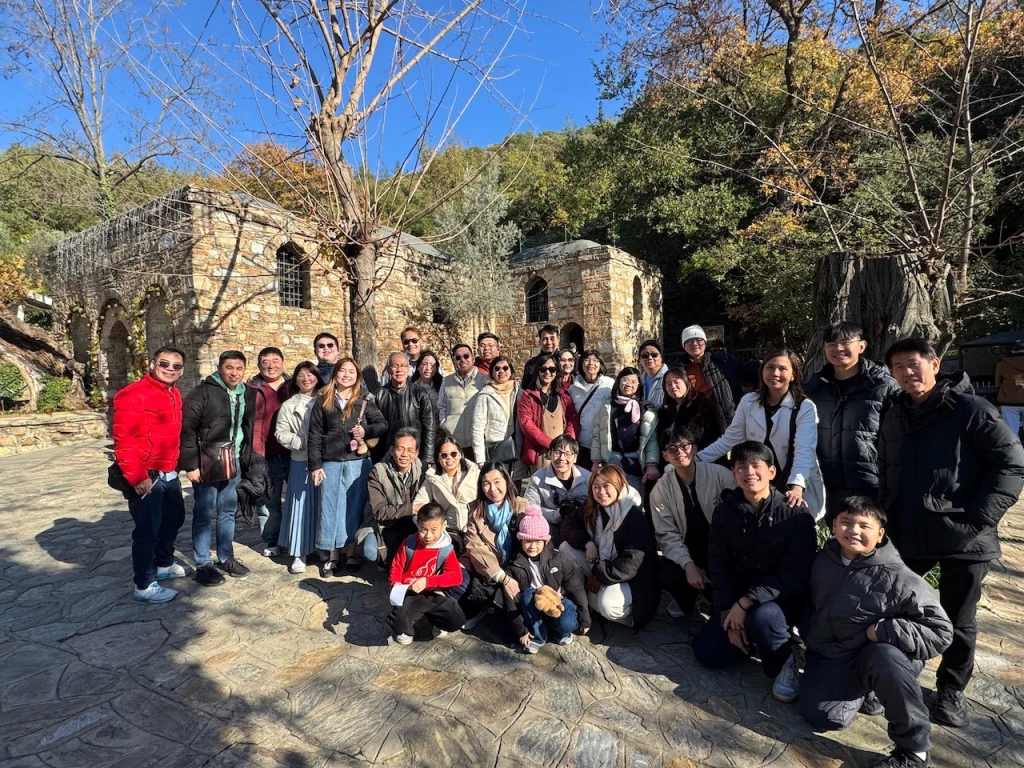
Today, the sanctuary consists of a small stone chapel with a vaulted roof, carefully preserved and surrounded by an atmosphere of peace, silence, and reflection.
The building includes:
- An entrance hall
- A main prayer room
- A chamber traditionally believed to have been Mary's bedroom
- A small room thought to have served as the kitchen
The simplicity of the structure reflects the humble life that, according to Christian tradition, the Virgin Mary lived during her final years.
A Peaceful Natural Setting
The House of the Virgin Mary is located approximately 7 kilometers (4.3 miles) from the ancient city of Ephesus.
The sanctuary is surrounded by beautiful gardens, pine trees, and a tranquil natural landscape that invites visitors to pray, reflect, and enjoy moments of quiet contemplation.
One of the site's most meaningful attractions is the Wishing Wall, where thousands of pilgrims tie handwritten prayers and wishes as a symbol of hope and faith.
A Must-Visit Destination in Ephesus
Whether you are a pilgrim, a history enthusiast, or simply a traveler seeking meaningful cultural experiences, the House of the Virgin Mary offers a unique combination of spirituality, tradition, and historical significance.
Located just a short distance from the ancient city of Ephesus, it is an essential stop for anyone wishing to explore the most important Christian heritage sites in Turkey and experience one of the country's most peaceful and inspiring sacred places.
Our partners