
 English
 Español
 Português
The Hippodrome of Constantinople (Sultanahmet Square)

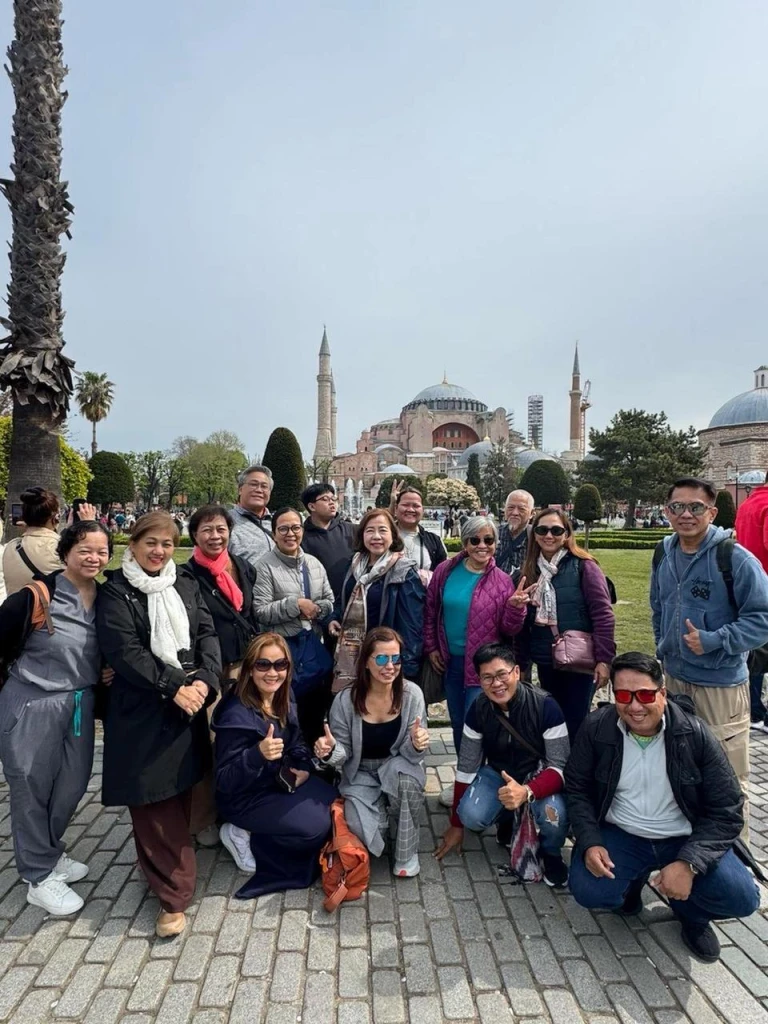
The Heart of Byzantine Entertainment
For centuries, the Hippodrome of Constantinople was the social, political, and sporting center of the Eastern Roman Empire and later the Byzantine Empire. Located in the historic heart of Istanbul, beside Hagia Sophia and the Blue Mosque, this magnificent arena hosted thrilling chariot races, imperial ceremonies, festivals, and public gatherings.
Today, the ancient Hippodrome forms part of Sultanahmet Square, one of Turkey's most visited historical landmarks.
History of the Hippodrome
The Hippodrome was originally built by the Roman Emperor Septimius Severus in 203 AD.
Later, Emperor Constantine the Great greatly expanded and beautified the complex after making Constantinople the new capital of the Roman Empire in the 4th century.
The Hippodrome eventually reached enormous dimensions:
- Approximately 450 meters (1,476 feet) long
- More than 120 meters (394 feet) wide
- Seating capacity of nearly 100,000 spectators
For hundreds of years, it served as the main center of entertainment and public life in Constantinople.
Chariot Races
Chariot racing was the favorite spectacle of the Byzantine people.
Two types of racing chariots competed:
- Biga – pulled by two horses
- Quadriga – pulled by four horses
The racing teams were organized into factions identified by colors. Eventually, two dominant groups emerged.
The Blues
The Blues mainly represented:
- The aristocracy
- The middle classes
- Conservative political groups
- Supporters of Orthodox Christianity
The Greens
The Greens mainly represented:
- The common people
- More radical political movements
- Certain religious factions
The rivalry between these two factions often became extremely violent.
The Nika Revolt
One of the most dramatic events in Byzantine history took place in the Hippodrome in 532 AD.
The Nika Revolt began as a conflict between the Blues and the Greens but quickly evolved into a massive uprising against Emperor Justinian I.
The rebellion resulted in:
- The destruction of large parts of Constantinople
- Thousands of buildings burned
- Approximately 30,000 deaths
After suppressing the revolt, Emperor Justinian rebuilt much of the city and commissioned the construction of the new Hagia Sophia.
The Hippodrome During the Ottoman Empire
Following the Ottoman conquest of Constantinople in 1453, the Hippodrome gradually lost its original purpose.
After the construction of the Blue Mosque, the area became known as:
At Meydanı (Horse Square)
where military ceremonies, horseback training, and public celebrations were held.
Historic Monuments of the Hippodrome
Although most of the original structure has disappeared, several remarkable monuments still stand today.
The Egyptian Obelisk
The Egyptian Obelisk is the oldest monument in Istanbul.
Originally erected by Pharaoh Thutmose III around 1490 BC in front of the Temple of Karnak in Luxor, Egypt, it was transported to Constantinople by Emperor Theodosius I in 390 AD.
Highlights include:
- Carved from pink granite
- Decorated with ancient Egyptian hieroglyphics
- Marble pedestal featuring imperial reliefs
- More than 3,500 years old
The marble base depicts Emperor Theodosius and members of his family attending official ceremonies.
The Serpent Column
The Serpent Column is one of the most iconic monuments of ancient Constantinople.
It was created by the Greeks after their victory over the Persians at the Battle of Plataea (479 BC).
Originally it featured:
- Three intertwined bronze serpents
- A large ceremonial tripod resting on their heads
- Installation at the Sanctuary of Apollo in Delphi
Emperor Constantine transferred the monument to Constantinople in 324 AD.
Although the serpent heads disappeared centuries ago, the column remains one of Istanbul's most significant historical landmarks.
The German Fountain
The German Fountain was presented as a gift by German Emperor Wilhelm II to Ottoman Sultan Abdülhamid II.
It was inaugurated in 1901 to commemorate the emperor's visit to Istanbul.
Features include:
- Octagonal design
- Beautiful mosaic-covered dome
- Neo-Byzantine architecture
- High-quality marble and granite construction
Its elegant design creates a striking contrast with the ancient monuments surrounding it.
The Walled Obelisk
Located at the southern end of the ancient Hippodrome, the Walled Obelisk was constructed from large stone blocks.
Its exact origins remain uncertain.
During the 10th century, Emperor Constantine VII Porphyrogenitus restored the monument and covered it with bronze plates.
However, these bronze decorations were stripped away and looted during the Fourth Crusade in 1204.
A Must-Visit Landmark in Istanbul
Today, Sultanahmet Square, the site of the ancient Hippodrome, remains one of Istanbul's most important historical attractions.
Walking among the Egyptian Obelisk, the Serpent Column, the German Fountain, and the Walled Obelisk allows visitors to experience more than 3,500 years of history in one remarkable location.
A visit to the Hippodrome offers a fascinating insight into the grandeur of Constantinople, the Byzantine Empire, and the rich cultural heritage that has made Istanbul one of the world's most captivating cities.
Our partners