
 English
 Español
 Português
The Fairy Chimneys of Cappadocia

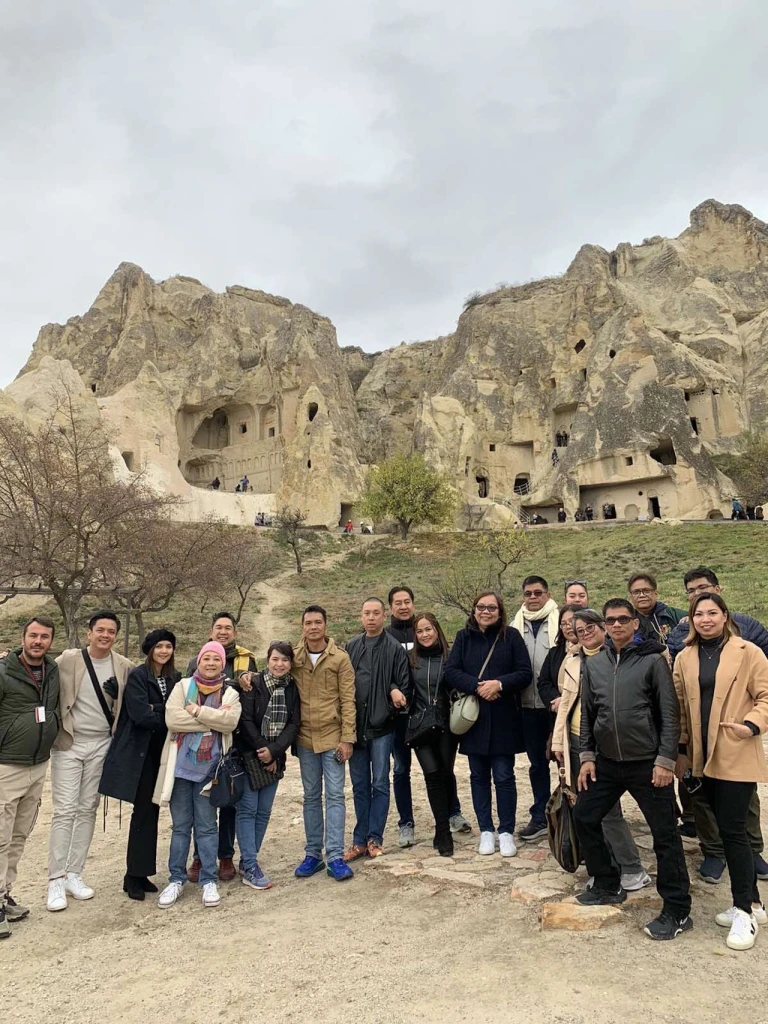
The world-famous Fairy Chimneys of Cappadocia are the result of millions of years of geological activity. Around 65 million years ago, two major continental plates gradually moved toward each other. As they collided, the Anatolian landmass was compressed between them, causing the formation of several mountain ranges, including the Taurus Mountains, which stretch across southern Turkey.
This geological process created deep fractures in the Earth's crust, allowing magma to rise to the surface. As a result, several volcanoes formed, with Mount Erciyes, Mount Hasan, and Mount Melendiz playing the most significant role in shaping Cappadocia.
Over thousands of years, these volcanoes erupted repeatedly, covering the region with vast quantities of lava, volcanic ash, and other volcanic materials. The ash eventually hardened into thick layers of volcanic tuff, a soft rock that can be easily carved. In some places, these deposits reached depths of nearly 100 meters (328 feet).
Over millions of years, rain, wind, snow, and dramatic temperature changes gradually eroded the volcanic tuff. Harder rock layers remained intact while the softer material wore away, creating the extraordinary rock formations known today as the Fairy Chimneys.
The ancient inhabitants of the region could not explain the origin of these unusual formations and believed they were created by supernatural beings and magical spirits. This folklore gave rise to the name "Fairy Chimneys," which is still used today.
Cappadocia is unique in the world because the simultaneous activity of several volcanoes produced an exceptionally thick layer of volcanic tuff, creating an unparalleled landscape that perfectly combines nature, history, and culture.
Paşabağ (Monks Valley)
Located between Göreme and Avanos, Paşabağ, also known as Monks Valley, is home to some of Cappadocia's most spectacular Fairy Chimneys. Many of these remarkable rock formations have multiple caps, giving them their distinctive appearance.
The valley earned its name because numerous monks and hermits settled here in search of solitude and spiritual devotion.
According to local tradition, Saint Simeon lived inside one of these Fairy Chimneys during the 5th century, using a three-story rock formation as his place of prayer and meditation.
Zelve Open-Air Museum
Zelve is one of Cappadocia's most fascinating rock-cut settlements. For centuries it was a thriving village until residents were relocated during the second half of the 20th century due to the risk of rock collapses.
Today, Zelve Open-Air Museum allows visitors to explore ancient cave dwellings, tunnels, pigeon houses, monasteries, and historic churches carved into the volcanic rock.
Among its most notable monuments are the Deer Church (Ceyikli Kilise) and the Grape Church (Üzümlü Kilise), where visitors can still admire early Christian symbols such as crosses, fish, and religious frescoes.
Ürgüp
Ürgüp is one of the most important and visited towns in Cappadocia. Located about 23 kilometers (14 miles) from Nevşehir, it combines rich history, traditional architecture, and modern tourism.
The town is home to numerous historic cave houses, ancient churches, and remarkable examples of Seljuk and Ottoman architecture.
For centuries, Ürgüp attracted European explorers and travelers fascinated by its unique landscapes and cave dwellings. Today, it is one of Cappadocia's main tourist centers, famous for its luxury cave hotels, excellent restaurants, lively atmosphere, and convenient access to the region's major attractions.
Mustafapaşa (Formerly Sinassos)
A few kilometers south of Ürgüp lies Mustafapaşa, formerly known as Sinassos, one of Cappadocia's most charming historic villages.
Its elegant 19th-century stone mansions reflect the prosperity of the Greek Orthodox community that once lived here. The village is also home to several remarkable churches, including the Church of the Holy Apostles, Saint Basil's Church, and Tavşanlı Church.
Ortahisar
Ortahisar is best known for its impressive rock-carved castle, one of Cappadocia's most remarkable natural fortresses.
For centuries, both Christians and Muslims used this fortress as a refuge during invasions and times of conflict. The town also preserves ancient churches, monasteries, traditional cave homes, and historic stone houses.
Uçhisar
Situated at the highest point in Cappadocia, Uçhisar offers some of the most breathtaking panoramic views in the region.
Its most famous landmark is Uçhisar Castle, a massive natural rock fortress that served for centuries as a defensive stronghold, refuge, and strategic observation point. Thanks to its elevated location, it also played an important role in protecting the ancient trade routes that crossed Anatolia, including the historic Silk Road.
From the summit of the castle, visitors can enjoy spectacular views of Cappadocia's valleys, Fairy Chimneys, volcanic landscapes, and unforgettable scenery that make this region one of the world's most extraordinary travel destinations.
Our partners