
 English
 Español
 Português
Cappadocia: History, Geology, and Climate

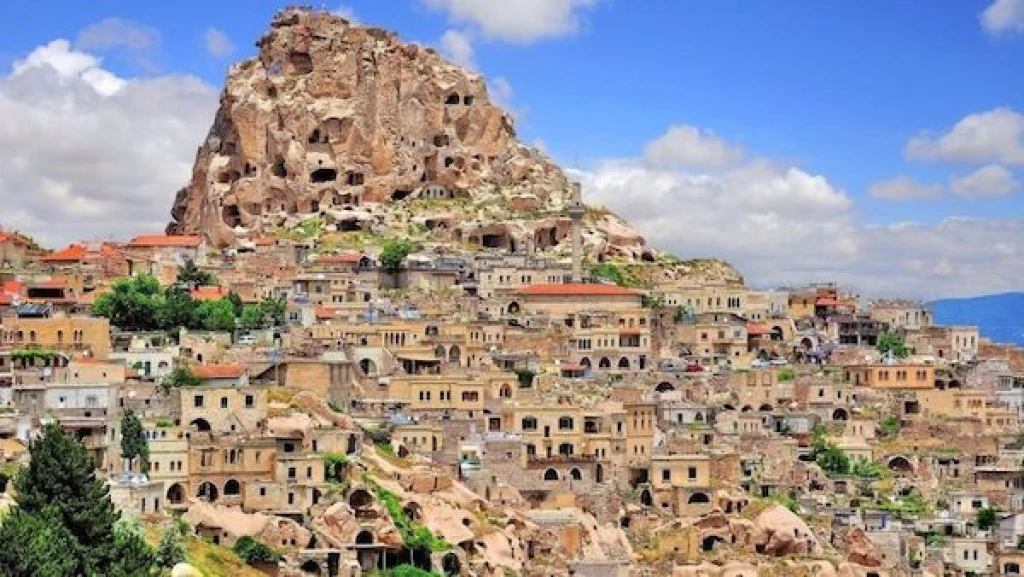
Cappadocia is an ancient region located in the heart of Central Anatolia, Turkey. It is world-renowned for its extraordinary volcanic landscapes, rock-carved cities, and the iconic Fairy Chimneys that have made it one of the country's most fascinating travel destinations.
The geological history of Cappadocia dates back millions of years to the Tertiary Period. At that time, much of Central Anatolia was covered by lakes, forests, and vast natural landscapes inhabited by animal species that are now extinct.
Over millions of years, repeated eruptions from the volcanoes surrounding the region blanketed the land with massive amounts of lava, volcanic ash, and other volcanic materials. Later, dramatic climate changes and successive Ice Ages transformed the landscape even further.
When the last Ice Age ended, erosion caused by wind, rain, rivers, and extreme temperature changes gradually sculpted the soft volcanic tuff into the spectacular rock formations that define Cappadocia today.
The melting glaciers also fed numerous rivers and streams, creating ideal conditions for the first human settlements. The rocky hills provided natural protection, while the soft volcanic rock was easy to carve into homes, storage areas, shelters, and later churches and underground cities.
The earliest communities settled near water sources and fertile valleys, where agriculture, animal husbandry, and hunting supported stable and prosperous societies.
Between approximately 16,000 BC and 8,000 BC, while much of Europe remained covered by ice, Anatolia enjoyed a milder and more humid climate. These favorable conditions encouraged the development of agriculture, the domestication of animals, and the establishment of permanent settlements, laying the foundations for some of the world's earliest organized religious beliefs.
The Origin of the Name "Cappadocia"
The origin of the name Cappadocia has long been the subject of historical debate.
A Persian inscription dating to the reign of King Darius I (522–486 BC) contains the word Katpatuka, considered the oldest known form of the name Cappadocia.
The most widely accepted interpretation translates Katpatuka as "The Land of Beautiful Horses," a description that remains closely associated with Cappadocia today.
However, some historians believe the name may have even older Hittite origins. According to this theory, it derives from Khepat, the mother goddess of the Hittites, combined with a suffix referring to people or territory. Under this interpretation, the name could mean "The Land of the People of Khepat."
Over the centuries, the name evolved through Persian and Greek civilizations before becoming the modern name Cappadocia.
Climate of Cappadocia
Located at an average elevation of approximately 1,100 meters (3,610 feet) above sea level, Cappadocia experiences a typical continental climate with four distinct seasons.
Spring (March – May)
Spring is one of the best times to visit Cappadocia. Temperatures are mild and comfortable, the valleys become lush and green, and occasional rainfall enhances the beauty of the landscape.
Summer (June – August)
Summers are hot and dry. Daytime temperatures often exceed 30°C (86°F), while evenings remain pleasantly cool thanks to the region's high elevation.
Autumn (September – November)
Autumn offers mild temperatures, clear blue skies, and ideal conditions for hiking, sightseeing, photography, and the region's famous hot air balloon flights.
Winter (December – March)
Winters are cold, with frequent snowfall transforming Cappadocia into a breathtaking winter wonderland. Snow-covered Fairy Chimneys create some of the region's most magical and photogenic landscapes.
A Truly Unique Destination
The unique combination of ancient history, extraordinary geology, rich cultural heritage, and spectacular natural scenery makes Cappadocia one of the world's most remarkable travel destinations.
Its scenic valleys, rock-cut churches, underground cities, ancient cave castles, and world-famous hot air balloon rides attract millions of visitors every year who come to experience one of Turkey's most extraordinary regions.
Our partners