 English
 Español
 Português
Cappadocia During the Roman Empire

During the Roman period (17 AD–395 AD), Cappadocia was home to three major urban centers: Kayseri (Caesarea), Kemerhisar (Tyana), and Avanos (Venessa). During this era, the Sasanian Empire of Persia (226–651 AD) repeatedly invaded the region. Another significant threat came from the Goths, who entered Anatolia through Thrace and launched raids into Roman territories.
As a result of continuous internal conflicts and external invasions, the Roman Empire gradually weakened. In 395 AD, following the death of Emperor Theodosius I, the empire was officially divided into two parts: the Western Roman Empire and the Eastern Roman Empire, later known as the Byzantine Empire.
The Spread of Christianity in Anatolia
During the early centuries of Christianity, when Christians faced widespread persecution, Basil of Caesarea (329–379 AD), the Archbishop of Caesarea (modern-day Kayseri), played a crucial role in establishing the foundations of Orthodox Christianity in Cappadocia.
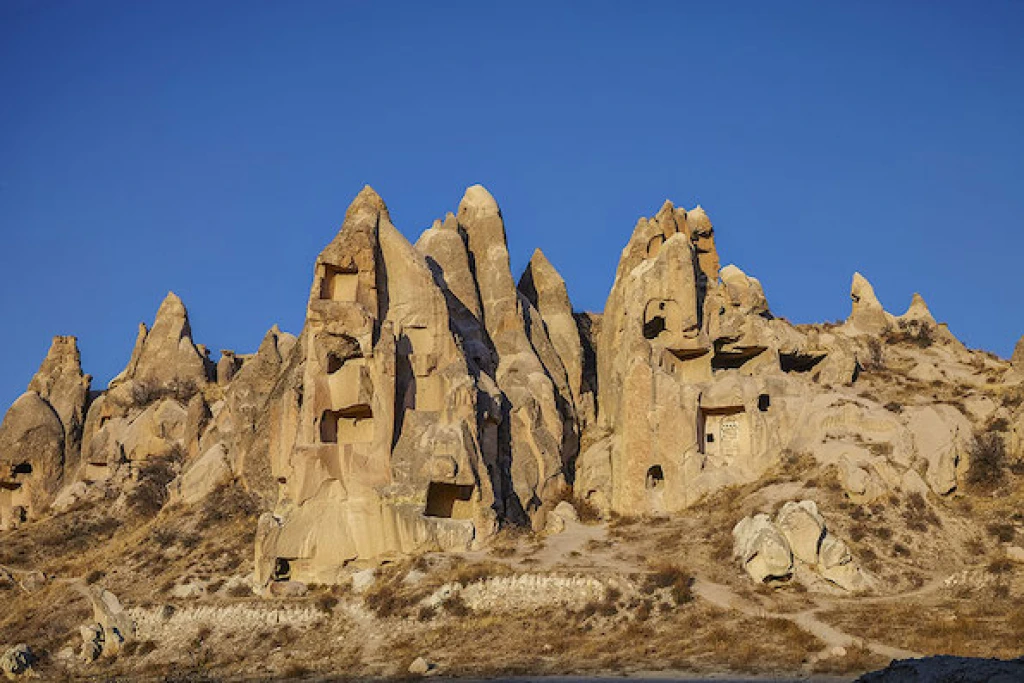
Seeking a peaceful place to practice their faith, many early Christians found refuge among Cappadocia's unique volcanic rock formations. They carved monasteries, churches, chapels, and living quarters directly into the soft rock, creating one of the most remarkable religious landscapes in Anatolia.
The three most influential saints of Cappadocia were:
- Basil of Caesarea (Kayseri)
- Gregory of Nyssa (modern-day Nevşehir)
- Gregory of Nazianzus
Known collectively as the Cappadocian Fathers, these three theologians are regarded as the founders of monastic life in Cappadocia. Through their teachings, theological writings, and missionary work, Christianity spread rapidly throughout the region, even before it became the official religion of the Roman Empire.
During the reign of Emperor Theodosius I (379–395 AD), Christianity was declared the official religion of the Roman Empire, while pagan religions and polytheistic practices were officially prohibited.
These historical developments transformed Cappadocia into one of the most important centers of early Christianity. Today, visitors can still explore hundreds of rock-cut churches, monasteries, underground sanctuaries, and religious settlements that preserve the region's extraordinary spiritual and cultural heritage.
Our partners