
 English
 Español
 Português
Avanos, Cappadocia: History, Pottery, and Cultural Heritage

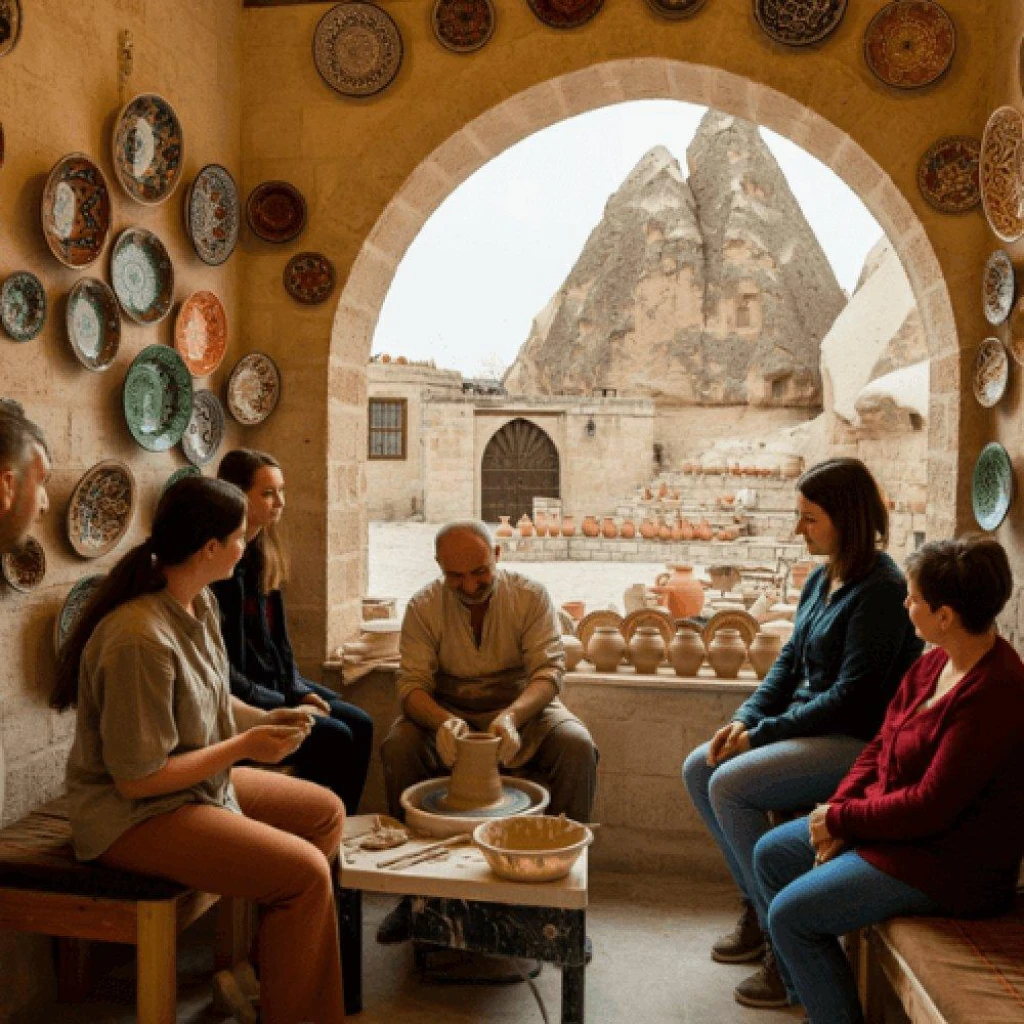
Located on the banks of the Kızılırmak River, the longest river in Turkey, Avanos is one of the oldest and most fascinating towns in Cappadocia. With a history spanning more than 5,000 years, it is renowned for its traditional pottery, historic stone houses, and rich cultural and religious heritage.
The History of Avanos
The earliest historical records related to Avanos date back to the Assyrian Trade Colonies Period (1900–1800 BC). Ancient commercial texts mention a settlement called Nenessa, which many historians consider to be the predecessor of present-day Avanos.
Later, during the Hittite period, the name Zu-Winasa appears on cuneiform tablets discovered at Boğazköy (Hattusa). During the Roman era, the town became known as Venessa.
Throughout history, Avanos served as an important political, religious, and commercial center of Cappadocia. The Greek geographer Strabo described it as one of the kingdom's most significant cities, alongside Caesarea (Kayseri) and Tyana.
After maintaining its importance throughout the Byzantine period, Avanos experienced renewed growth during the Ottoman era. Beginning in the 18th century, new neighborhoods developed around mosques, markets, and commercial centers, contributing to the town's expansion.
Traditional Houses of Avanos
The historic Turkish houses of Avanos are outstanding examples of traditional Anatolian architecture.
Built primarily from local stone and timber, these homes are characterized by:
- Spacious inner courtyards surrounded by high stone walls
- Narrow, elongated windows
- Traditional wooden balconies and bay windows
- Large family gathering rooms known as "sofas"
- Rooms equipped with fireplaces and built-in storage spaces
Many of these historic homes reflect the influence of the Turkish nomadic lifestyle and preserve architectural features that have remained virtually unchanged for centuries.
Historic Bridges over the Kızılırmak River
The Kızılırmak River flows through the heart of Avanos, dividing the town into two sections.
Throughout history, several bridges have been built to facilitate transportation and trade. The most famous is the historic Avanos Bridge, which originally featured a wooden deck and served as a toll bridge for many years.
Another symbol of the town is the Pedestrian Suspension Bridge, inaugurated in 1973. Stretching approximately 180 meters (590 feet), it offers visitors beautiful views of the river while connecting both sides of the town.
Dereyamanlı Church
Dereyamanlı Church is considered one of the oldest Christian churches in Cappadocia.
Carved directly into the rock between the 4th and 6th centuries, it preserves numerous early Christian symbols, including Greek, Roman, and Maltese crosses.
Its architecture belongs to the so-called Syrian Style, characteristic of the pre-Byzantine period.
Çavuşin
Located about 7 kilometers (4.3 miles) from Avanos, Çavuşin is one of Cappadocia's oldest and most historically significant villages.
The original settlement was abandoned during the 1950s because of the risk of rockfalls, leaving behind a spectacular landscape of cave houses, abandoned dwellings, and ancient churches carved into the cliffs.
Today, it is one of the best places to discover the evolution of Cappadocia's architecture and early Christian religious art.
The Church of Nikephoros Phokas
Also known as the Çavuşin Church or Pigeon House Church, this impressive cave church was carved into the rock during the 10th century.
It is associated with the Byzantine Emperor Nikephoros II Phokas, who visited Cappadocia during his military campaigns in Cilicia.
Among its most remarkable features are:
- Beautifully preserved Byzantine frescoes
- Images of angels and saints
- Scenes from the life of Jesus Christ
- Portraits believed to represent the emperor and members of the imperial family
The Church of Saint John the Baptist
Situated at the highest point of Çavuşin, the Church of Saint John the Baptist is one of the oldest Christian churches in Cappadocia.
Built during the 5th century, it preserves architectural characteristics typical of early Christian basilicas and offers magnificent panoramic views over the surrounding valleys.
Although many of its frescoes have faded over time, several important biblical scenes can still be admired.
Paşabağ (Monks Valley)
Just a few kilometers from Avanos lies Paşabağ, one of Cappadocia's most iconic natural attractions.
The valley is famous for its spectacular Fairy Chimneys crowned with large mushroom-shaped rock formations.
For centuries, it served as a retreat for hermit monks seeking solitude, meditation, and prayer.
Saint Simeon's Hermitage
The most famous monastic dwelling belonged to Saint Simeon.
Carved into a three-story Fairy Chimney, it includes a small chapel and a modest living chamber where the saint spent many years in spiritual retreat.
Zelve Open-Air Museum
Just a short drive from Paşabağ lies the Zelve Open-Air Museum, one of Cappadocia's most remarkable historical sites.
Between the 9th and 13th centuries, Zelve was one of the region's most important centers of Christian monastic life.
Until 1924, Greek and Turkish communities lived together peacefully in the village. Following the population exchange between Greece and Turkey, only Turkish families remained.
Due to the danger of rockfalls, the original village was evacuated during the 1950s, and its residents moved to nearby New Zelve.
Today, visitors can explore:
- Spectacular volcanic landscapes
- Ancient cave dwellings
- Historic monasteries and churches
- Underground tunnels and passageways
- More than a dozen churches dating from the Byzantine Iconoclastic Period
Avanos: A Blend of Tradition, History, and Art
Today, Avanos is one of Cappadocia's most visited destinations thanks to its unique combination of history, traditional craftsmanship, authentic architecture, and breathtaking natural scenery.
Its renowned pottery workshops, historic monuments, rock-cut churches, and unforgettable landscapes make Avanos an essential stop for anyone wishing to experience the true cultural heart of Cappadocia.
Our partners